SearchBar & Intelligent Tutorial
SearchBar Widget
The SearchBar is a dual-pane search interface — a persistent compact pill that expands into a fullscreen overlay with filtered results, image previews, and integrated tutorial suggestions.

Smart Search Results
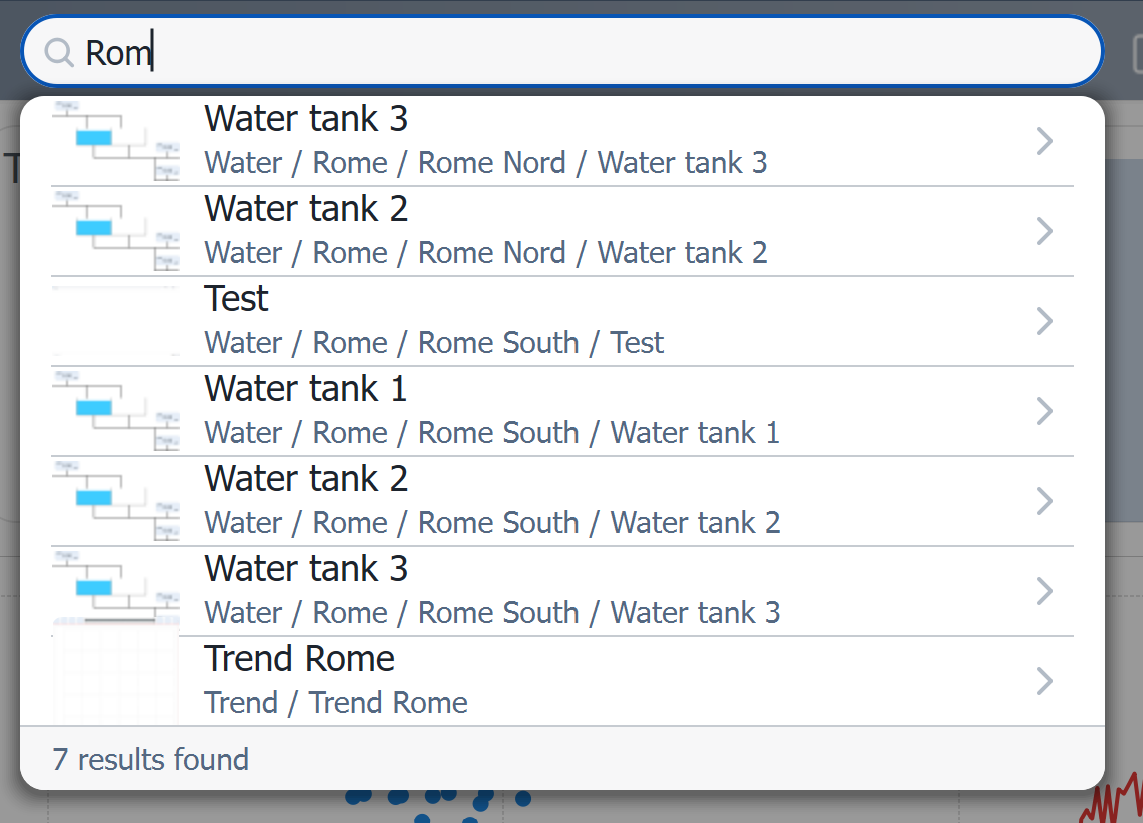
Type a query and the bar expands to show matching pages with their full hierarchical path, thumbnail preview, and category:
Tutorial Integration
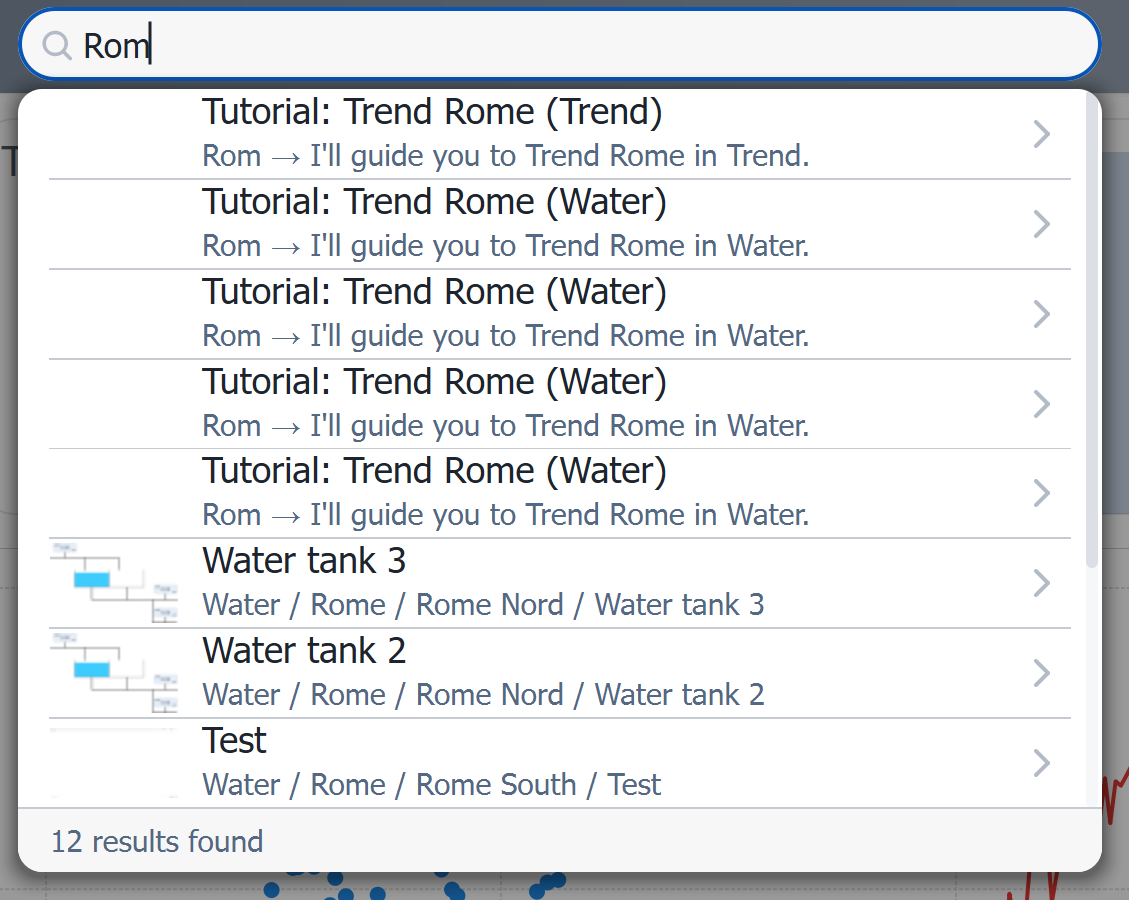
This is where it gets powerful. When the intelligent tutorial system is active, the SearchBar doesn't just find pages — it offers to guide you there step by step:
How Tutorials Work
Behind the scenes, a multi-agent search engine written in Python runs 3 parallel searches (menu fuzzy match, knowledge graph query, manual text search), combines the results with confidence scoring, and generates step-by-step tutorial instructions in 2ms (cached) or 119ms (fresh). The tutorial then executes directly in the WinCC OA UI — expanding menus, highlighting items, navigating to pages, and showing overlay bubbles with contextual guidance.
The Tutorial Engine — Multi-Agent Architecture
The tutorial system uses a parallel search architecture we designed to maximize both speed and accuracy:
User Question: "dove trovo Roma?"
        │
        ▼
  ┌─────────────┐
  │ Cache Check  │──► Hit (>85% fuzzy match) ──► Return in 2ms
  └──────┬──────┘
         │ Miss
         ▼
  ┌──────────────────────────────────┐
  │     3 Parallel Search Agents     │
  │                                  │
  │  Menu Search  │  KG Search  │  Manual Search │
  │  (fuzzy match)│  (graph)    │  (full-text)   │
  └───────┬───────┴──────┬──────┴───────┬────────┘
          │              │              │
          ▼              ▼              ▼
  ┌──────────────────────────────────────┐
  │           Orchestrator               │
  │  Multi-source scoring & fusion       │
  │  ≥0.70 = certain, ≥0.40 = ambiguous │
  └──────────────┬───────────────────────┘
                 │
                 ▼
  ┌──────────────────────────────────┐
  │     Deterministic Tutorial Builder │
  │  expand_menu → navigate → overlay  │
  └──────────────────────────────────┘
Per-Token Scoring
We implemented a per-token fuzzy matching algorithm that handles natural language queries across languages. For example:
- Query:
"dove trovo Roma"→ meaningful tokens:["roma"] - Menu item:
"Water/Rome/Rome Nord"→ tokens:["rome"] - Match:
"roma"vs"rome"→ similarity 0.89 + token overlap bonus → certain match
This means operators can type in everyday Italian and find English-named menu items — or vice versa.